This website uses cookies to enhance browsing experience. Read below to see what cookies we recommend using and choose which to allow.
By clicking Accept All, you'll allow use of all our cookies in terms of our Privacy Notice.
Essential Cookies
Analytics Cookies
Marketing Cookies
Essential Cookies
Analytics Cookies
Marketing Cookies
Based on overseas investment data from the first half of 2024 in Asia, the mining and metals sector is the only area that has seen a significant increase in mergers and acquisitions compared with 2023. This growth reflects a positive outlook on cross-border mining investments and acquisitions from investors, mining companies, and governments alike.
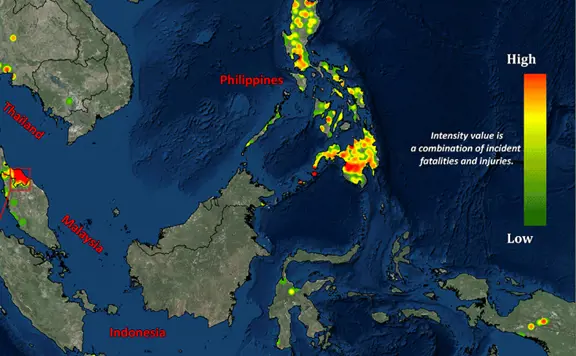
In addition to Africa – currently the most attractive destination for mining investments – Southeast Asia remains a key region for Chinese mining companies to invest in and develop, both now and in the foreseeable future. Compared with other major destinations for Chinese mining investments – excluding North America and Australia – Southeast Asia generally offers a more stable social environment. Security concerns are primarily confined to specific areas such as the Myanmar–China border, southern Thailand, and the Mindanao region in the Philippines. Apart from these areas, the overall social security situation is favourable for mining investments.
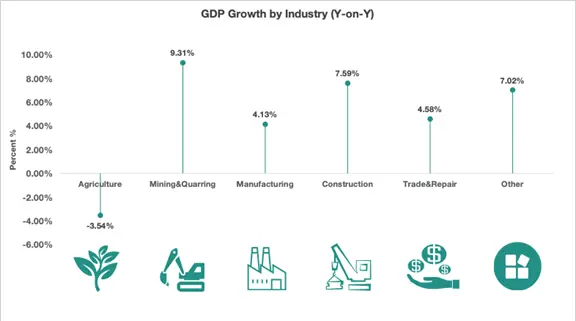
Indonesia, located in Southeast Asia, is rich in mineral resources and is a major supplier of coal, nickel, iron, tin and gold to the international market. In previous years, mining has been a hotspot for foreign investment in Indonesia, with Chinese companies actively investing in the country's nickel, iron and coal-fired power industries.
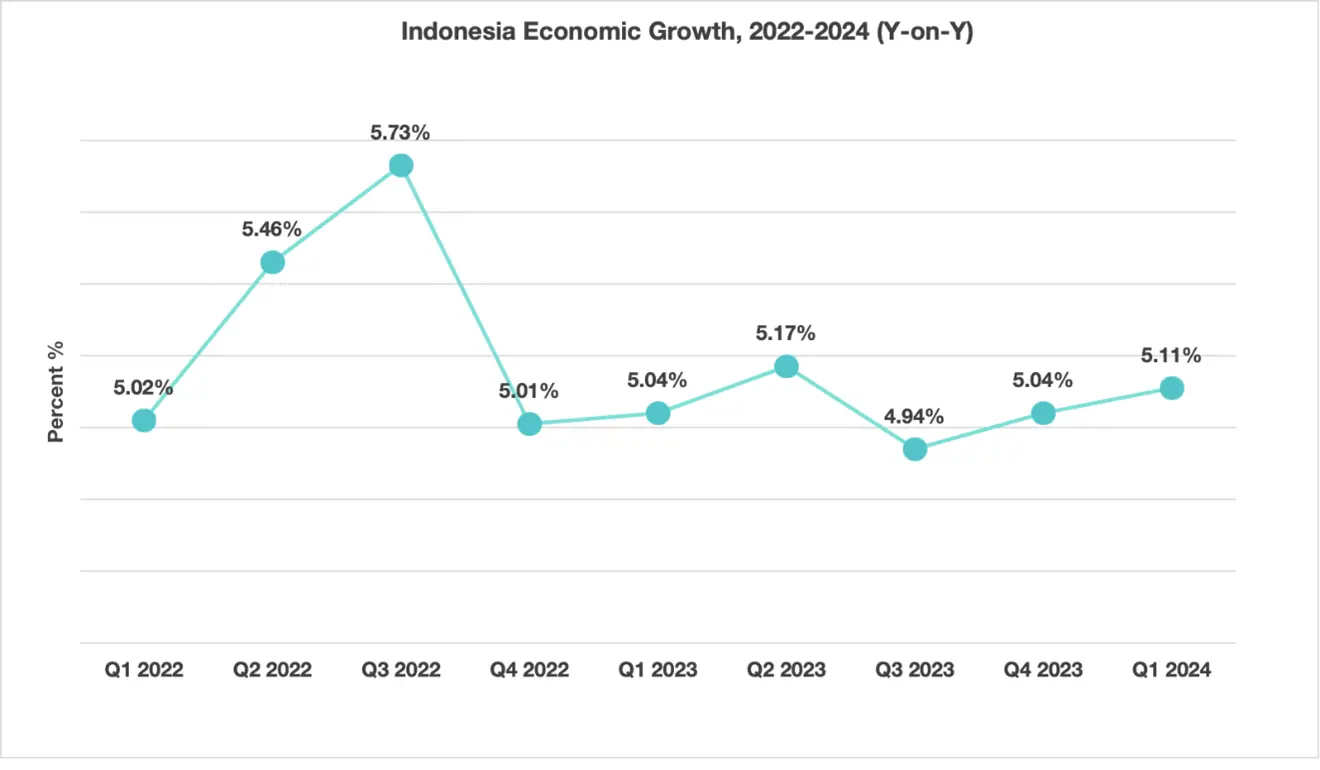
In 2023, Indonesia's gross domestic product grew by an impressive 5.05% (data from the World Bank). This robust economic recovery was accompanied by a record high in foreign direct investment. Statistics indicate that Indonesia attracted approximately $7.3 billion of Chinese investment in 2023, with the mining (including metallurgy) and base metals sectors receiving the largest shares.
Why is Indonesia so appealing to miners and mining investors?
Stable political system and structure
Although Indonesia has experienced political instability over the past few decades, it has made significant progress in democracy and the rule of law. The establishment and enforcement of systems and institutions are effective, ensuring that changes in political parties and key leaders do not disrupt the overall functioning and stability of the country. This consistency in national policies and regulations provides confidence and security for foreign investors.
Abundant mineral resources with significant exploration potential
Indonesia is rich in mineral resources with favourable geological conditions that host world-class deposits such as the Grasberg copper-gold mine, Batu Hijau copper mine, and Onto gold-copper mine. The country has significant exploration and development potential and has ranked among the top 20 countries in the world for mineral exploration budget investment in the past decade (2013 to 2023).
In the past 5 years, Indonesia's annual exploration budget has exceeded US$70 M (slightly lower in 2018) and accounts for 1.01% to 1.66% of the global exploration budget. While this is not as high as major exploration countries like Canada and Australia, it is significantly higher than other Southeast Asian countries.
Strong economic growth
According to data from Indonesia's National Statistics Agency, the country's economic growth rate has exceeded 5% over the past 5 years. Furthermore, forecasts from the International Monetary Fund and the World Bank predict that Indonesia's annual economic growth will continue to exceed 5% over the next 2 to 3 years. This strong economic development provides demand and momentum for mining project development in Indonesia.
Generally good relations with China in recent years
Risks and challenges
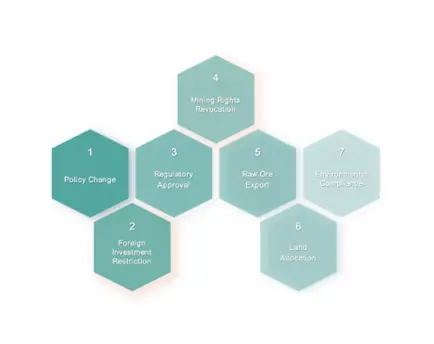
Policy risk
The Indonesian government has been adjusting mining policies since the enactment of the new mining law in 2009, particularly policies relating to raw mineral exports. For example, the government banned raw mineral exports in 2014, then revoked that ban in 2017, and then reactivated the ban in 2020. According to the news from Shanghai Metals Market, the government may implement similar bans for bauxite, cobalt and coal exports in the coming years, with details yet to be finalised.
Foreign investment restrictions
Under current Indonesian law, foreign investors can fully own shares in Indonesian mining companies but must gradually divest 51% of the shares to the Indonesian government or Indonesian investors within a certain period after production begins. The divestment price is based on fair market value, excluding mineral or coal reserves but considering the extractable reserves during the mining licence period.
Given the long investment cycle and substantial upfront investment in mining, losing control over mining projects within a certain timeframe after production can seriously reduce investment returns. Investors should fully consider the divestment situation when using financial models to calculate project returns and make informed investment decisions.
Regulatory approval
When investing through the acquisition of mining company shares, the transfer of shares requires approval from the Ministry of Energy and Mineral Resources. Investors should ensure that obtaining this approval is a condition precedent in the transaction documents to avoid being held liable for breach of contract if approval is not obtained.
Mining rights revocation
Indonesian mining law broadly and vaguely defines the reasons for mining rights revocation, such as noncompliance with obligations specified in licenses and regulations. The legal framework related to mining development in Indonesia is complex, with numerous regulations, decisions, notices, and orders issued by the government, the Ministry of Energy and Mineral Resources, and the Directorate General of Mineral and Coal. Foreign investors unfamiliar with local laws may risk mining rights revocation due to noncompliance. In August 2022, the Indonesian government revoked over 2,000 mining licences, often citing noncompliance with regulations.
Before investing in Indonesia, foreign investors should conduct comprehensive, in-depth research and analysis of local laws and policies to ensure legal compliance and avoid the risk of mining rights being revoked.
Raw ore export
In recent years, the Indonesian government has frequently issued ore export bans and increased export tariffs to enhance resource value and control resource flow. Currently, Indonesia bans the export of nickel and bauxite ores; for copper, iron, zinc, and lead concentrates, mining companies must build local processing and refining facilities and complete at least 50% of the construction progress before exporting.
To ensure ore exports, mining investors must complete local processing and refining to meet the minimum legal requirements. Supporting processing and refining facilities are required for certain mineral types. The investment in refineries is substantial and has a long construction period, requiring investors to carefully consider investment costs and returns.

Land use
In Indonesia, mining rights and land rights are independent. After obtaining a mining licence, mining rights holders must compensate land rights holders to gain the right to use surface land for development. Additionally, due to Indonesia's high forest coverage, mining rights holders must sign a forest land use agreement with the central government to obtain forest land use rights if the mining area overlaps with forest areas.
Environmental compliance
Mining development materially impacts the environment, and Indonesian law requires mining investors to conduct environmental impact assessments before exploration. The Indonesian government imposes strict requirements on post-mining closure and reclamation work, with specific implementation guidelines.
Exploration licence holders must include reclamation plans in their annual plans and budgets, and deposit reclamation guarantees in Indonesian state-owned banks.
When applying for a production licence, exploration licence holders must also prepare reclamation and post-mining plans for the production phase, covering at least a 5-year period or the actual service life if the project timeframe is less than 5 years.
Production licence holders must prepare 5-year reclamation plans, post-mining plans, and deposit reclamation and post-mining guarantees in Indonesian state-owned banks.
Guarantees can only be withdrawn with approval from the Minister of Energy and Mineral Resources, governors, regents, or mayors.
Conclusion
Indonesia's mineral resources are abundant, with significant exploration and development potential. However, influenced by resource nationalism, mining development in Indonesia presents both opportunities and challenges. Due to Indonesia's complex mining policies, investors must thoroughly understand relevant policies before making investment decisions and continually monitor policy changes during mining development to respond to potential adverse impacts. Before investing in Indonesian mining, investors are advised to hire professional mining lawyers for legal consultation and due diligence to mitigate investment risks and protect their interests to the maximum extent.
Figures: Lori Zhou
Ferrexpo plc commissioned SRK to produce a Minerals Expert Report (MER) as part of a prospectus for a global offering of shares and admission of ordinary shares for listing on the London Stock Exchange.
Learn MoreWilton Resources Corporation Limited commissioned SRK in 2014 to evaluate their Ciemas gold project in West Java, Indonesia, and produce an Independent Qualified Person’s Report.
Learn More