This website uses cookies to enhance browsing experience. Read below to see what cookies we recommend using and choose which to allow.
By clicking Accept All, you'll allow use of all our cookies in terms of our Privacy Notice.
Essential Cookies
Analytics Cookies
Marketing Cookies
Essential Cookies
Analytics Cookies
Marketing Cookies
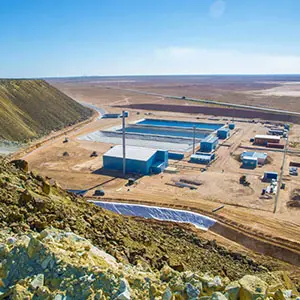
Following the completion of two resettlement action plans (RAP) for RBM between 2010 and 2012, the SRK team were requested to implement the management plans in order for project construction to commence. The resettlement implementation includes the physical displacement of 18 homesteads, 125 grave sites, and economic displacement of over 200 fields. All implementation activities are closely monitored by the Rio Tinto board and benchmarked against both company policies and international standards. The SRK team has been involved in all aspects of the implementation process from early project design to actual housing construction and negotiations.
The team have worked closely with the project engineers to design appropriate replacement housing and ensure that the designs are endorsed by the affected people. Replacement land has also been identified and secured by the project team.
Together with an independent valuator, compensation rates have been developed aiding in the compilation and population of over 200 compensation agreements, predominantly for economically displaced homesteads.
Throughout the process the team has been extensively involved in various levels of stakeholder engagement, from local government, affected people, and traditional authorities, ensuring the Free Prior and Informed Consent (FPIC) is achieved.
Developing greenhouse gas monitoring and reporting protocols to international financier requirements
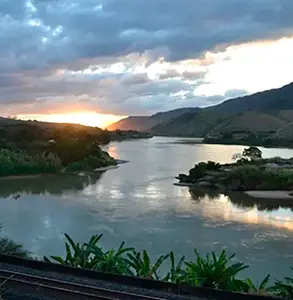
Reviewed recovery actions carried out along the Doce River from the Fundão dam to the river's mouth.
Identified and quantified the impacts of expanding processing plant capacity to 3,300 tons of ore per day (MTD).
Implement stakeholder engagement management plan to strengthen relationship with impacted communities.
Sustainability-related disclosure is evolving rapidly across Africa, driven by increasing awareness of environmental, social, and governance (ESG) issues and the need for greater transparency and accountability in business practices.
Learn MoreThe materiality of climate action in mineral resource and reserve reporting will surge in the decade ahead. Climate action is already of high interest to investors.
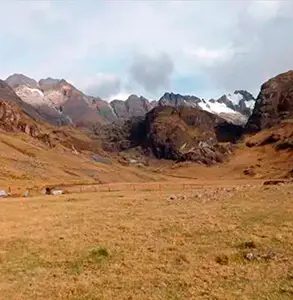
Learn MoreChilean mining legislation requires physical and chemical stability of mining sites. Deposition of tailings at sub-sea environments has not been specifically included in chemical stability guidelines.
Learn MoreThis presentation outlines the context of the African cement Industry. This covers the following aspects:
Learn More